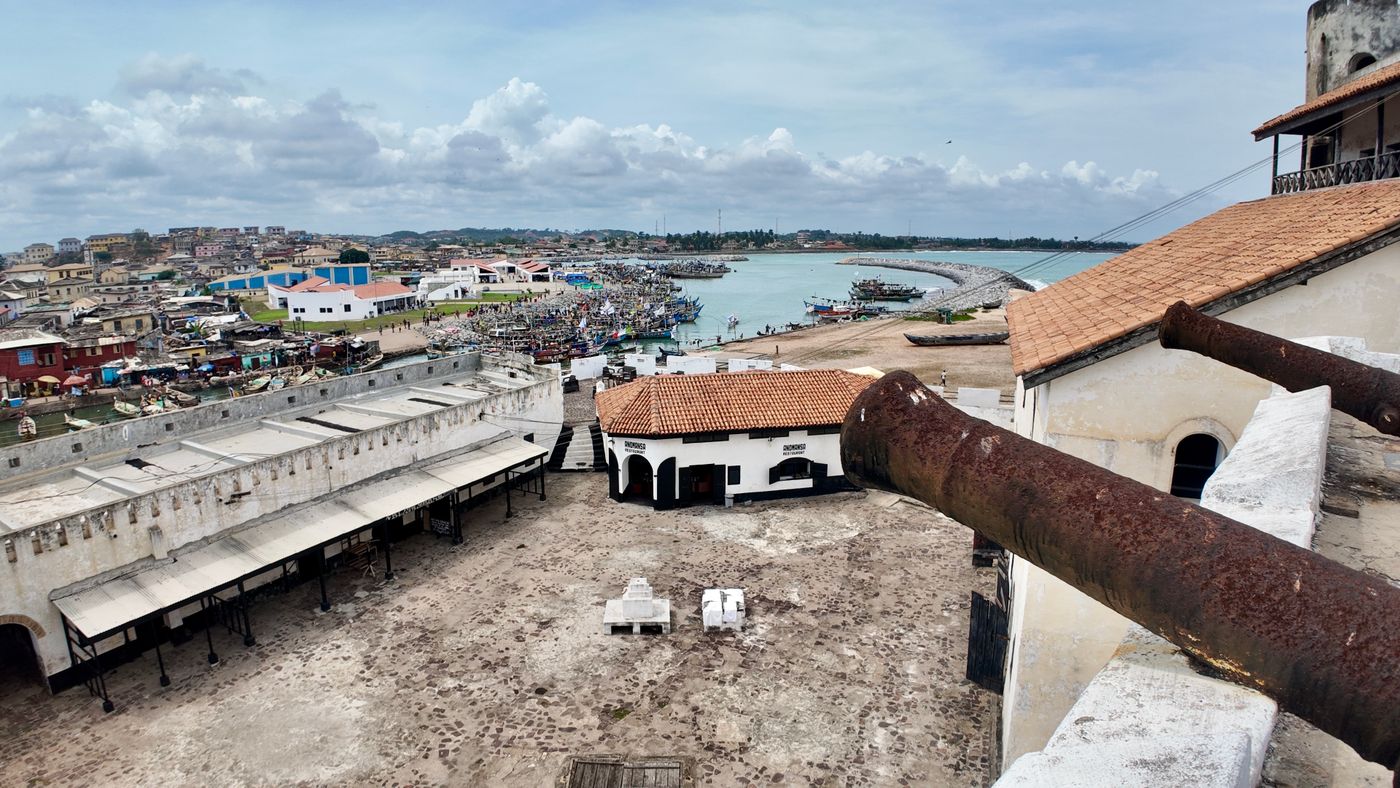
Cape Coast Castle
UNESCO World Heritage Site. Former slave-trading fort — its 'Door of No Return' is a profound memorial.
Everything public about Cape Coast Castle
Cape Coast Castle is a historic fortress and former slave-trading post located in Cape Coast, Ghana, serving as a poignant reminder of the transatlantic slave trade. This UNESCO World Heritage Site features the infamous 'Door of No Return', a memorial to the millions of Africans who were forcibly taken from their homeland. The castle's rich history and cultural significance make it a must-visit destination for those interested in Ghana's past.
Cape Coast Castle was built by the Swedish in 1653 and later taken over by the British, who used it as a key location for the transatlantic slave trade. The castle played a significant role in the slave trade, with millions of Africans being held and transported from its grounds. The castle's history is a complex and tumultuous one, reflecting the darker aspects of European colonization in Africa.
- UNESCO World Heritage Site
- Former slave-trading fort
- Built by the Swedish in 1653
- Features the 'Door of No Return'
- Served as the seat of the British colonial government in Ghana
Visitors to Cape Coast Castle can take a guided tour of the castle and its grounds, which includes the 'Door of No Return' and the castle's museum. The castle is open daily, and visitors can purchase tickets on site. It is recommended to hire a guide to get the most out of the experience and to gain a deeper understanding of the castle's history and significance.
The 'Door of No Return' at Cape Coast Castle is a symbol of the transatlantic slave trade, but it is also a powerful symbol of African resilience and the enduring spirit of the African diaspora.
Videos, photos & articles
Install the App
Tap the “Install App” button in the menu (or the banner at the bottom) to add GhanaMann to your home screen — it opens full-screen like a real app, even offline.