The European fort at Sekondi is **Fort Orange**, a small Dutch trading post built on the Sekondi shoreline in the 17th century — one of the many European fortified posts that dotted the Gold Coast between the 15th and 19th centuries. Sekondi, in the Western Region (today twinned with Takoradi as the Sekondi-Takoradi metropolis), sits on a stretch of coast that attracted European traders because of its sheltered landing and access to inland gold and, later, timber and cocoa. The Dutch, who had wrested primacy on the Gold Coast from the Portuguese by the mid-1600s, established Fort Orange there around 1640–1642. It was never a grand castle like Elmina or Cape Coast — it was a modest fort or lodge, part of a chain of Dutch posts that included Butre, Axim (Fort St. Anthony), Shama (Fort St. Sebastian) and Kormantin. Its function was trade: gold, ivory, and — grimly — enslaved people, in the era before Britain's 1807 abolition and the later effective suppression of the Atlantic slave trade. The fort changed hands with the shifting fortunes of the European powers. The Dutch and the British jostled along this coast for two centuries, and after the Anglo-Dutch Gold Coast Treaty of 1867 and the eventual Dutch withdrawal from the Gold Coast in 1872, Britain took over the remaining Dutch forts. Fort Orange passed into British hands and was used in various minor administrative or customs capacities before falling into disrepair. What stands today is fragmentary. Unlike Elmina Castle or Cape Coast Castle — both UNESCO World Heritage Sites and major tourist attractions — Fort Orange at Sekondi is largely a ruin, its remains absorbed into the modern townscape and the busy port and railway environment of Sekondi-Takoradi. It has not received the same conservation attention as the big castles, which is a quiet loss, because Sekondi's fort is part of the same story: the long, complicated encounter between Europe and the Gold Coast that shaped Ghana's colonial history and its Atlantic-world connections. If you're planning to visit, the practical anchors in Sekondi-Takoradi are the railway station (the old Gold Coast railway headquarters), the harbour area, and the nearby coastal heritage sites. For the fort specifically, it's worth checking with the Ghana Museums and Monuments Board (GMMB) or the Western Regional office of the Centre for National Culture for current access, since ruins of this kind are not always formally managed as visitor sites. A fitting Akan thought: *"Abofoo na wɔkyekyere kuro"* — it is the people who build the town. Forts like Orange were built by outsiders for trade, but the towns around them were made and remade by Ghanaians. The fort is a relic; Sekondi is the living thing. If you'd like, I can go deeper on the Dutch forts of the Gold Coast as a group, or on how Fort Orange compares with Elmina, Cape Coast, and Fort St. Sebastian at Shama.
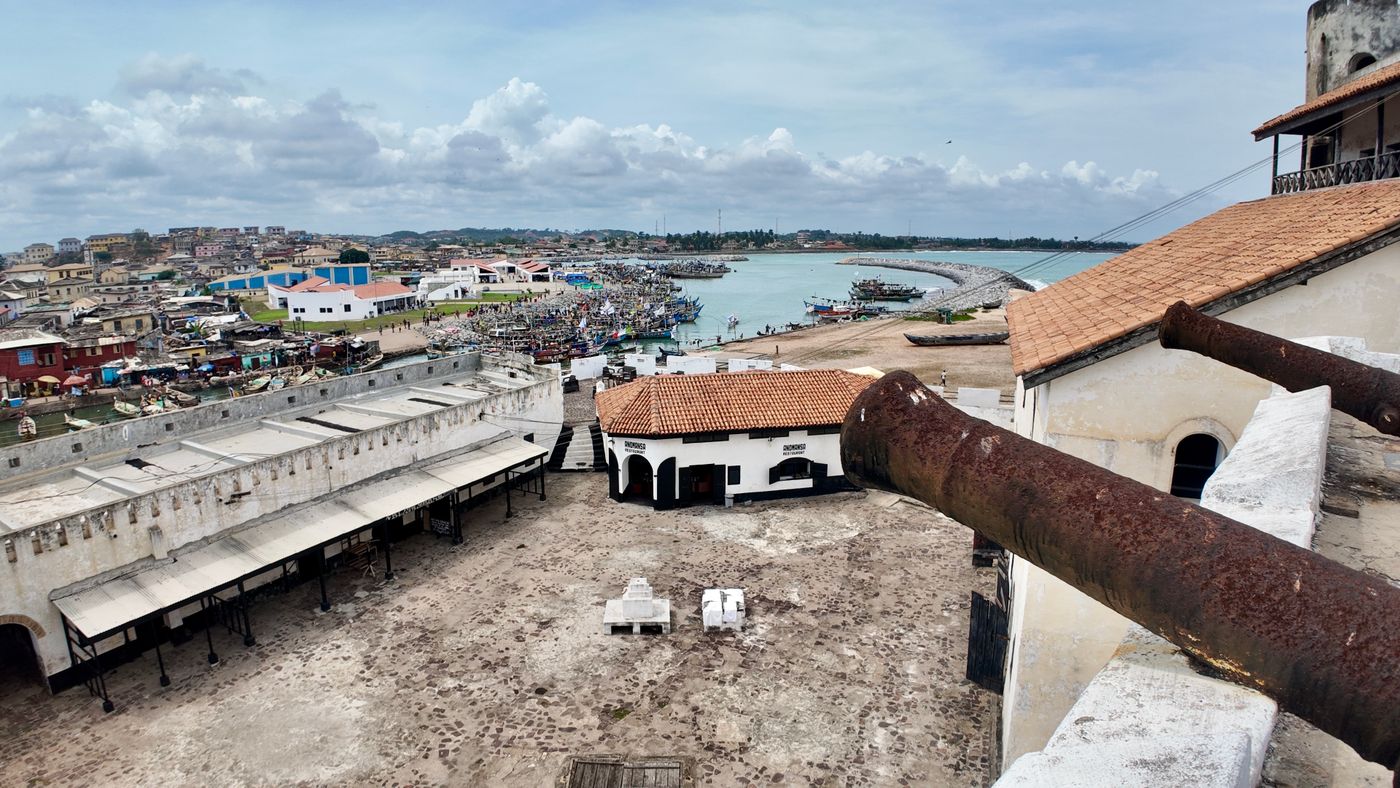
Fort Sekondi (Fort Orange)
Fort Sekondi, also known as Fort Orange, is a historic Dutch colonial fort built in 1642 in Sekondi, Western Region of Ghana. It served as a trading post during the trans-Atlantic slave trade and stands as one of several European forts along Ghana's coast. The fort is a significant heritage site reflecting Ghana's colonial history.
Fort Orange
Fort Orange was a Dutch colonial fort built in Sekondi (now Sekondi-Takoradi) during the 17th century as part of the Dutch West India Company's trading operations along the Gold Coast. The fort served as a trading post and defensive structure during the era of European competition for control of the coastal trade. Today, remnants of the fort contribute to Ghana's rich colonial heritage sites in the Western Region.
Fort Sekondi
Fort Sekondi is a historic 17th-century Dutch fortification located in Sekondi-Takoradi, overlooking the Atlantic coast. Originally built by the Dutch for trade and defense purposes, it served as one of several European forts along Ghana's coast during the colonial era. Today it stands as a heritage site reflecting Ghana's colonial history and the transatlantic trade period.
Install the App
Tap the “Install App” button in the menu (or the banner at the bottom) to add GhanaMann to your home screen — it opens full-screen like a real app, even offline.