The Naa Gbewaa Palace is in **Pusiga**, in the Pusiga District of the **Upper East Region** — the traditional seat of the **Mamprusi (Mamprugu) Kingdom**, whose overlord bears the title **Yaa Naa**. It sits in the far north-eastern corner of Ghana, close to the borders with Burkina Faso (to the north) and Togo (to the east), on the road running from Bolgatanga through Bawku toward the border. The palace is named for **Naa Gbewaa**, the legendary ancestor-king from whom the Mole-Dagbani peoples trace descent — the Mamprusi, Dagomba, Nanumba and Mossi all regard him as their founding forebear. That shared ancestry is why Mamprugu is often called the "elder" of the northern kingdoms: tradition holds that the Yaa Naa's line is senior, and disputes over that seniority have shaped centuries of northern Ghanaian politics, including the long-running chieftaincy tensions in Bawku between the Kusasi and Mamprusi. The palace itself is a **traditional royal compound (yili)** — round mud-and-thatch buildings within a walled courtyard, with the regalia, ancestral shrines and the court of elders at its heart. It is a living institution, not a museum: the Yaa Naa holds court there, receives visitors, and settles disputes with his elders. The current Yaa Naa is **Naa Bohagu Mahami Abdulai Sheriga**, who has occupied the skin since 2003 — though as with all chieftaincy matters, it's worth confirming the latest with the palace or the Upper East Regional House of Chiefs if you're planning anything formal. If you're visiting, Pusiga is roughly 30–40 km from Bolgatanga via Bawku, and the practical advice is the same as for any royal court in the north: go through the elders, dress modestly, and don't photograph the palace or regalia without permission. As the Akan would put it, *"Ɔhene anim yɛ hu"* — the presence of a king is awesome; approach with respect. Are you planning a visit, researching the Mamprusi kingdom, or looking for something specific near the palace? Tell me and I'll go deeper.
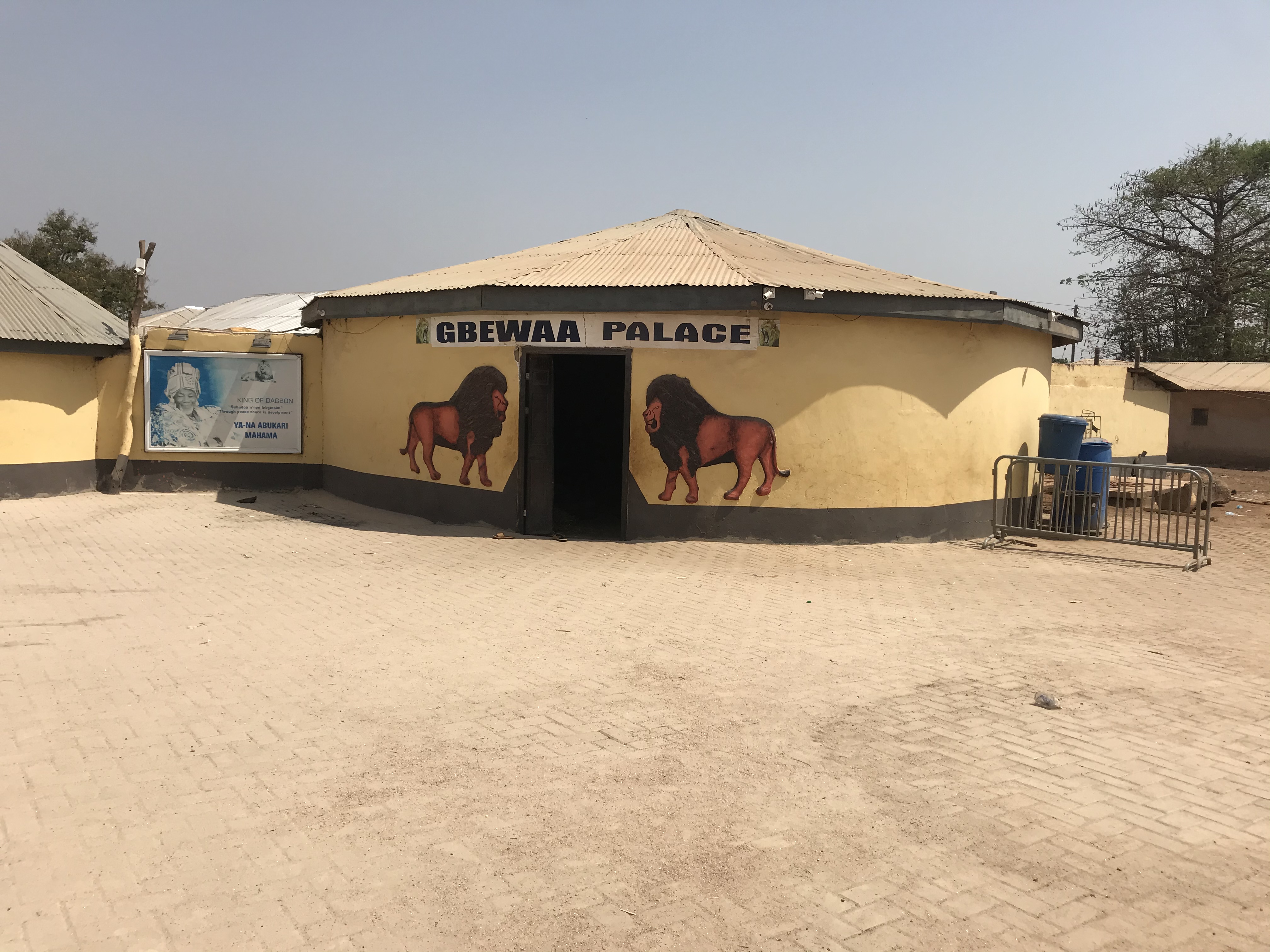
Yaa-Naa's Palace, Gbewaa Palace
Gbewaa Palace is the official seat of the Yaa-Naa, the paramount chief and overlord of the Dagbon Traditional Area in the Northern Region of Ghana. The palace serves as the traditional headquarters of the Dagbon Kingdom and hosts the traditional council that oversees customary matters across Dagbon. It is located in Yendi, the traditional capital of Dagbon.
Yaa Naa's Palace, Gbewaa Palace
The Gbewaa Palace in Yendi is the official seat of the Yaa Naa, the paramount chief and overlord of the Dagbon Traditional Area in the Northern Region of Ghana. The palace serves as the administrative and ceremonial center for one of Ghana's most ancient and respected traditional kingdoms, housing the Yaa Naa and the traditional council that governs customary matters across Dagbon.

Gbewaa Palace (Yendi Palace)
Gbewaa Palace, also known as Yendi Palace, is the official seat of the Yaa-Naa, the paramount chief of the Dagbon Traditional Area in the Northern Region of Ghana. The palace serves as the administrative and ceremonial center of one of Ghana's oldest and most significant kingdoms, with a rich history dating back centuries. It is a symbol of Dagbon's cultural heritage and traditional governance.
Naa Gbewaa Palace
The Naa Gbewaa Palace is the seat of the Ya-Na, the overlord of Dagbon Traditional Area in the Northern Region. It serves as the traditional council headquarters for one of Ghana's most prominent kingdoms, administering customary affairs and preserving Dagbon cultural heritage.
Yaa Naa's Palace, Yendi
The Gbewaa Palace in Yendi is the seat of the Yaa Naa, the paramount chief and overlord of Dagbon Traditional Area in the Northern Region. The palace serves as the administrative and ceremonial center for one of Ghana's most historically significant kingdoms, housing the traditional council that governs customary matters across Dagbon.
Yaa-Naa's Palace (Gbewaa Palace)
The Gbewaa Palace in Yendi is the official seat of the Yaa-Naa, the paramount chief and overlord of Dagbon Traditional Area in the Northern Region. The palace serves as the traditional administrative center for the Dagbon Kingdom, one of Ghana's oldest and most influential traditional states. It is the venue for important customary rites, judicial proceedings, and cultural ceremonies of the Dagomba people.
Install the App
Tap the “Install App” button in the menu (or the banner at the bottom) to add GhanaMann to your home screen — it opens full-screen like a real app, even offline.